
Podcast: Play in new window | Download (Duration: 42:43 — 58.7MB) | Embed
Subscribe: Apple Podcasts | Spotify | Android | RSS | More
Finding Flow and Connection
with Laura Silverstein
Finding Flow with Laura Silverstein
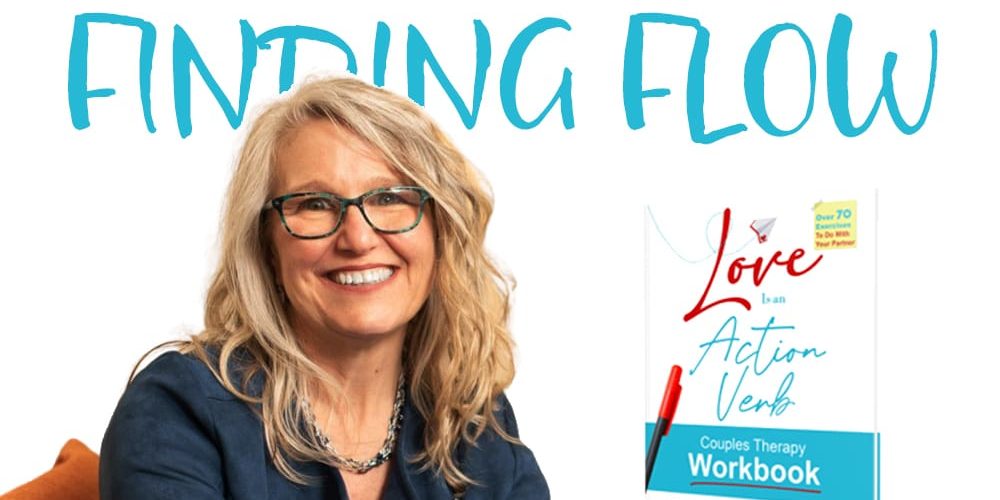
Welcome back, fellow Open Nesters! In honor of Love Month, we recently had the absolute pleasure of hosting Laura Silverstein, author of Love is an Action Verb, for a deeply resonant encore discussion about finding more flow and connection in our relationships. As we navigate this “open nest” phase—a term we prefer over “empty nest” to reflect hearts and lives open to endless possibilities—having an expert like Laura, who is both a Gottman-trained therapist and a fellow traveler in this mid-life transition, felt like a true gift. At 53, Laura is right there with us, balancing a twenty-year marriage and the bittersweet transition of her own children heading off to college

One of the most profound takeaways from our conversation was Laura’s perspective on secure attachment and how we model it for our children, even as they become adults. She described secure attachment as the “net underneath them,” providing a sanctuary of comfort and trust so they know they are never alone in the world. For those of us struggling with the quiet of the house, Laura offered a beautiful reminder: we must provide reassurance of unconditional love, regardless of our children’s successes or failures. It is about “being with the moment” and accepting our role as a steady presence in their lives, even as they build their own worlds.
We also dove deep into the mechanics of long-term partnership, particularly the Gottman concept of “bids for attention”. Laura calls these “micro-bursts of connection”—tiny actions like a winky-face text or a hug that lasts longer than twenty seconds to release oxytocin. These small gestures are the currency of love, and they don’t take much time, yet they set a precedent of warmth in a relationship. After the kids leave, it is vital to redirect that energy we once gave to our children back toward each other, actively cherishing the love we have built.
The part of the interview that truly stayed with me—and that my co-host Amir and I are still digesting—is the idea that most conflict stems from a dream that is not being actualized. Laura explained that ongoing, distressing conflicts are often about a deep purpose or desire that is being suppressed. She shared a powerful “Dream Catcher” exercise where one partner acts as the dreamer and the other listens with deep curiosity, asking questions about the “why” and the “excitement” behind the dream rather than focusing on the logistics or the “how”. This shift from “stop doing this” to “this is why I need this for my soul” changes the entire landscape of compromise.
We also touched on the importance of transparency and honesty regarding our individual core needs versus our areas of flexibility. Laura noted that when we give up a core need, we are essentially giving up our “bones and body,” moving out of integrity with ourselves. However, when we understand our partner’s ultimate dreams, we find the motivation to be flexible in other areas—like my recent month-long solo trip to the ocean, a gift of “compersion” from my husband that brought renewed love and patience back into our primary partnership.
As we wrapped up, Laura reminded us that the heart is a muscle that requires proactive exercise. Whether it is practicing “extreme gratitude” or engaging in “skydiving listening,” the goal is to expand our capacity for love through consistent, intentional action. I encourage you to check out Laura’s website, LauraSilverstein.com, or follow her “Laura’s Love Advice” on social media for more pragmatic tips on comforting those in pain and building inclusive, communicative relationships.
In the interview, Laura Silverstein describes a Gottman Institute exercise where one partner acts as the “dreamer” and the other as the “dream catcher”. The goal of the dream catcher is to use deep, probing curiosity to understand the meaning behind a partner’s desires rather than focusing on the logistics of how to achieve them.
The Role of the Dream Catcher
The dream catcher’s job is to listen intently and ask open-ended, non-leading questions. They must avoid “yes or no” questions or practical concerns, such as “How are we going to afford this?”
Core Dream Catcher Questions
Laura highlighted several specific questions a partner can ask to uncover the “dream within a conflict”
-
What is frightening for you about this?
-
What is exciting for you about this?
-
Why is this so important to you?
-
What would it look like if this dream were actually actualized?
-
How would you feel if this dream came true?
-
What would you be doing in this best-case scenario?
The Purpose of the Questions
By asking these questions, the listener helps their partner expand on their vision. This allows the couple to identify core needs—things that are essential to a person’s integrity or “soul”—and separate them from areas of flexibility, where compromise is possible once the underlying dream is understood.
About Tessa
Tessa Krone is the engine behind and the face of The Open Nesters.
Tessa holds an MA in Consciousness Studies and is a speaker, coach, program, and journey facilitator & leader, author, and, of course, Podcaster.
Her offerings are based on her mission to help people open to their most self-expressed, loving selves. Tessa’s specialties include embodiment from all the senses and elements of our inner and outer lives, ranging from mindfulness, dance, play, and sensory exploration in nature. If she had one superpower, it would be to help people, especially as they age, to live more open-hearted lives.
Please email Tessa to make a connection. And visit her page here on the Open Nesters Website. If you like, please answer the question:
What do you need to OPEN your NEST? In your LIFE. In your BODY. In your SPIRIT. Do you need MORE…
- Adventure
- Freedom of Expression
- Exploration and Fun
- Body Movement
- New circles of friends
- Deep love relationships